


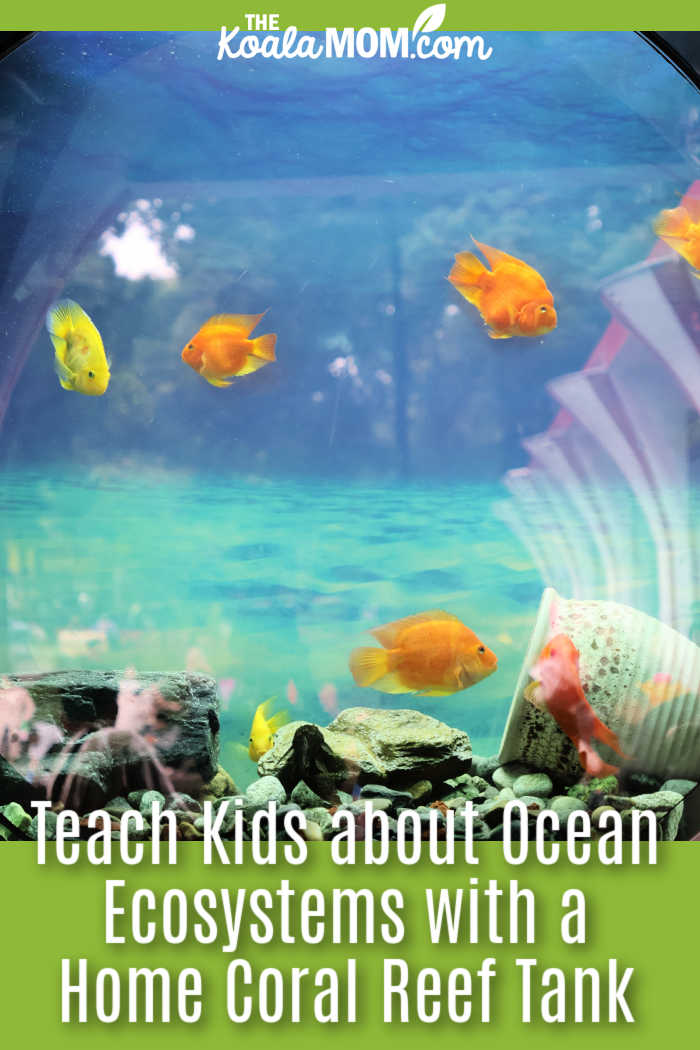
A home reef tank isn’t all about decoration and good looks, but it also brings the biodiversity of the ocean straight into your living room. Apart from its beautiful appearance, it also makes an excellent educational tool if you have kids.
The tank has its own mini-ecosystem, so kids have plenty to learn about, whether it’s the chemistry in water, marine conservation or even symbiotic relationships. Not sure where to start with this educational project? Here are a few useful ideas to keep your little ones entertained with a daily science lesson.
This post contains affiliate links; as an Amazon associate, I earn from qualifying purchases.
Symbiosis Made Fun
There are many types of symbiosis in nature. But when it comes to your tank, you can easily showcase the partnership between corals and algae. Make sure you have quite a few different corals for reef tanks for even better results.
While they look like beautiful rocks, kids can understand that corals are more than that. They are living animals that operate like small greenhouses. Now, corals have a special symbiosis with the algae living inside them, which makes a nice science lesson.
How come? Algae rely on sunlight to create food for the coral. The process is called photosynthesis. In return, the coral makes a good and safe home for algae and provides them with essential nutrients like carbon dioxide and ammonium.
You can make this activity fun when feeding the tank. Show your kids how corals can extend small tentacles to catch plankton. It’s basically about animals getting their energy from the environment they live in.
Water Chemistry Made Easy
Water chemistry can be quite boring for kids. Unless your little ones have a thing for chemistry, chances are they won’t really be interested in your lesson, yet you can make it more exciting with your tank by turning it into a real-life laboratory experiment.
Generally speaking, marine ecosystems are very sensitive. Any change in their environment can also affect them. Having a tank allows you to show kids how any small change in water can impact life.
Get a reef saltwater refractometer. You may actually have one, since it allows you to check the water every now and then. Normally, you can check for salinity, but you can also check for pH and alkalinity. The more things in your tank, the more you’ll need this tool to ensure the water parameters closely mimic the natural ocean environment.
While the first lesson may not be the most exciting one, further lessons will display small changes. Let your kids understand how oceans rely on a balance that leaves no room for flexibility. Everything is extremely strict.
If the pH changes or the temperature fluctuates, the entire ecosystem is stressed, so other changes may also be observed such as fish becoming lethargic.
If your kids like corals and have seen them in real life, this process is also responsible for the bleaching process in the wild.
Of course, you don’t have to kill your corals to prove a point, but your kids could become your assistants in your regular water checks and take notes.
Learn about the Cleanup Group
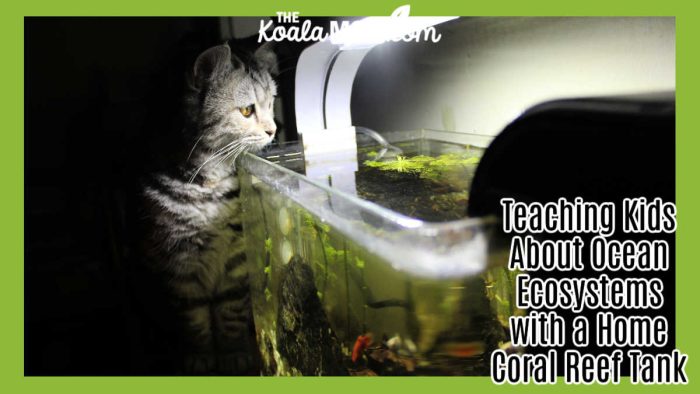
Normally, cleaning the tank and everything in there becomes your own responsibility. But depending on what you have in there, you may actually have a nice cleanup crew to help out. And this is a nice lesson for kids because they get to become familiar with different animals and discover how nature manages its own waste.
Grab your little ones, sit down by the tank and observe the diverse cleaning crew. You may have some snails in there, or perhaps you have hermit crabs, not to mention shrimp.
The idea in this science lesson is to help kids understand how each creature has its specific role in the tank. You may have to do some research and become familiar with each creature’s specifications though. From many points of view, your tank is like a little city full of workers where everyone has a crucial job to prevent chaos.
Snails like to eat algae, so it won’t stick to the glass. Hermit crabs like leftovers, so all the uneaten food will be successfully removed. As for shrimp, they keep the fish clean.
It’s a lesson about roles, but also about recycling. The only thing your kids know about recycling is the fact that they need to separate paper, metal, plastic and general food. After this lesson, they’ll also understand that the ocean has its own recycling system, which is entirely based on small creatures.
Global Conservation for Kids
If you truly care about nature, you’d probably like your kids to follow the exact same core principles in life. Certain things can be explained and implemented at a young age, but others seem a bit more complicated. Global conservation is one of them.
Your kids are probably too young to understand the concept, but it can be made easy with a different science lesson by the water tank.
You can teach kids about threats to global oceans, yet you’ll also need some interesting and exciting facts, so do your homework upfront. You can teach them about plastic pollution, but also about temperatures that keep rising due to climate change, affecting fragile marine habitats.
Base this lesson on your tank. Let kids understand how delicate their personal tank is when it comes to pollution, then compare it to the oceans of the world through engaging picture books such as:
You could also encourage them to adopt some healthy habits, such as being careful when it comes to wasting water. They can also learn that trash is meant to go into the bin, rather than into the sea. This way, they can protect coral reefs in the wild.
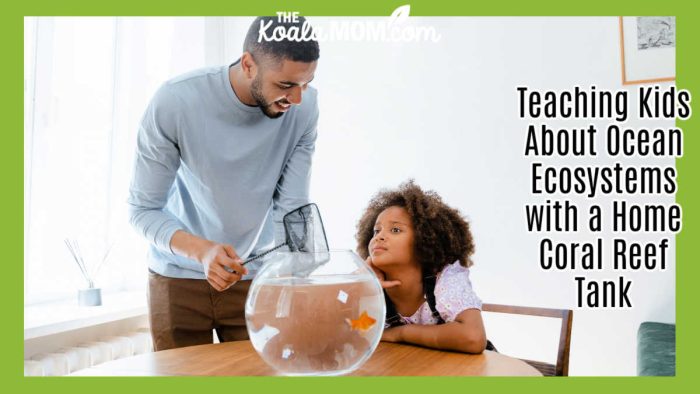
Bottom line, your tank can hide multiple stories and lots of interesting science lessons for kids. Make it an exciting adventure a few times a week, but make sure to research your stories and provide exciting facts to turn daily maintenance into a learning journey for your kids.
No Responses Yet