


We were walking to my Jeep in the church parking lot when a girl dashed up to my oldest daughter and invited her to the upcoming girls’ Bible study.
“Thanks,” my teen said politely, “but I already go to another club on Friday nights.”
As the girl walked away, I said, “That was nice of her to invite you. Maybe you could go one evening if you’re free.”
My daughter shrugged. “They’re kind of cliquey. They’ve all known each other since Kindergarten.”
I couldn’t argue with her.
Unfortunately, that wasn’t the first time our family has encountered cliques in Catholic churches.
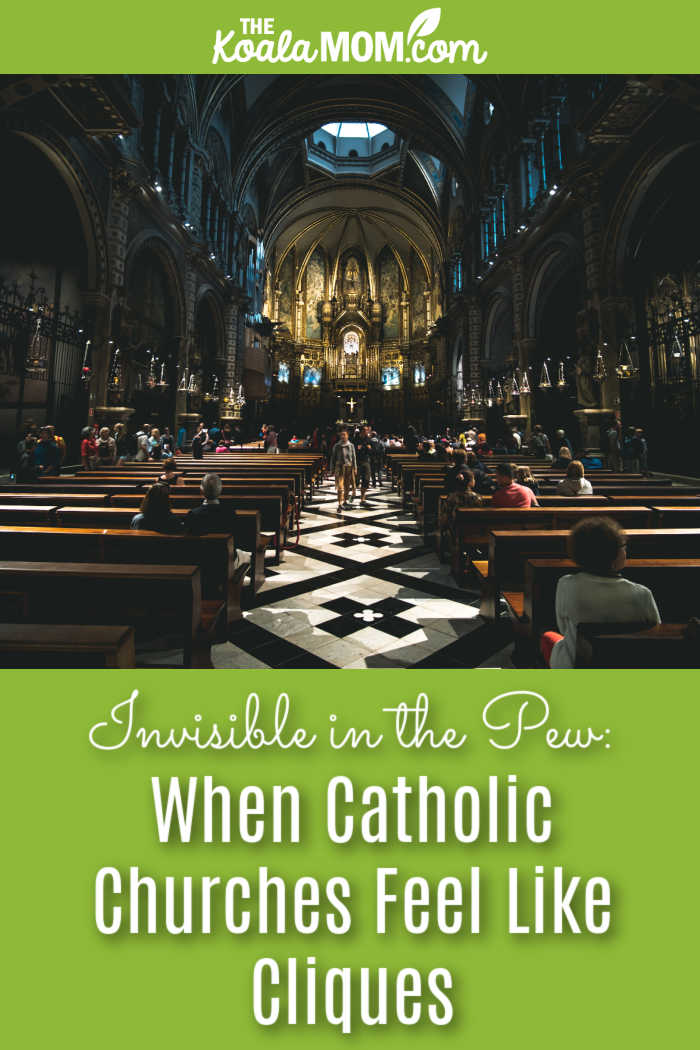
My Catholic Church Experience
Over the past twenty years, I’ve attended many Catholic parishes across two provinces. My children have received sacraments at almost ten different churches from Edmonton to Victoria. We’ve experienced churches that warmly welcomed families and churches where children felt like interruptions. We’ve found priests who knew our names and priests who barely acknowledged us. We’ve attended parishes with pancake breakfasts, coffee after Mass, and thriving ministries—and parishes where everyone seemed to rush home the moment Mass ended.
Through all of that, one thing has become clear: some churches are genuinely welcoming, and others only feel welcoming if you already belong.
That’s heartbreaking, because Catholic cliques should feel like a contradiction.
What Would Jesus Do?
Jesus had close friends, yes, but His ministry was marked by radical openness to everyone he encountered. He welcomed children, ate with tax collectors, healed those considered “outsiders”, spoke with women in public, and touched those considered untouchable. The early Church became known for a community where barriers were broken down, not reinforced.
And yet many of our parishes unintentionally create invisible barriers, which can cause deep hurt within the parish and turn away those who aren’t strong in their faith.
I know cliques don’t form out of malice. They form out of familiarity.
Longtime parishioners naturally gravitate toward people they know. Parents whose children attend the parish school already have built-in daily community. Ministry groups develop routines and inside jokes. Friendships deepen over years. None of this is inherently bad, but it can be very difficult for newcomers in the parish to navigate.
The Lasting Pain of Cliques
The problem comes when comfort replaces hospitality.
I’ve seen how painful that can be, especially for children.
One summer, my daughter Lily became close friends with another girl from our parish after meeting at their local swim lessons. They played together often and genuinely enjoyed each other’s company. But at parish events, everything changed. If that girl’s school friends were around, she acted as though Lily didn’t exist. It happened repeatedly over the next few years.
When they were alone, they were best friends. In a group, Lily became invisible.
That kind of exclusion leaves scars.
I’ve also felt this as a homeschooling mom. In parishes with strong school communities, there can be an unspoken divide between school families and everyone else. Information spreads through school-parent conversations, like the summer everyone in the school knew about the parish Vacation Bible School but I didn’t. Friendships are built in school pickup lines or around parent volunteer hours. Invitations circulate through existing networks while families outside that network can feel forgotten.
This isn’t just about homeschooling versus Catholic school. It affects converts, newcomers, single adults, widows, blended families, families with disabilities, and anyone who doesn’t fit the dominant parish culture. On Instagram, I see women dealing with infertility and LGBTQ Catholics talking about this. I’ve also experienced it as the only divorced woman in my parish.
If we want our parishes to reflect Christ and his love, we need to become more intentional about inclusion.
What Does Intentional Inclusion Look Like?
One way to practice intentional inclusion is to remember that parents are the primary educators of their children. Families make school decisions based on prayer, finances, logistics, learning needs, and countless other factors. Whether children attend Catholic school, public school, homeschool, online school, or another educational setting, parents deserve respect—not judgment for their choices. Unfortunately, as a Catholic homeschooling mom, I’ve rarely experienced that, especially when we’ve belonged to parishes with a school attached.
Parishes can also build stronger bridges between school and parish life. School events, clubs, and ministries should be open and welcoming to all parish families, not just enrolled students. For example, I’ve enrolled my children in the catechism program at our parish for many years, not because they need the faith formation (that’s covered in our homeschool curriculum), but because I want them to make friends.
Unfortunately, that has almost never happened in churches where separate catechism classes are offered for school families and non-school families. That separation can unintentionally create a divide between families who participate in church life differently. Even when nobody intends exclusion, children quickly pick up on who is considered part of the “core” community and who is seen as peripheral.
Intentional inclusion also happens when the parish plans ways to draw the community together. For example, one parish we attended did not have a hall or anywhere for parishioners to gather. There were attempts to serve coffee after Mass, but the crush of people leaving the church made the tiny space of the foyer so crowded that we literally grabbed coffee and kept moving.
In parishes where we’ve felt most welcomed and invited in, coffee happened after every single Mass, in a nearby hall, where everyone was welcome to sit down, relax, catch up, and share a snack. The kids looked forward to the cookies as much as the parents looked forward to the coffee.
Walking into Mass and looking at hundreds of strange faces can feel overwhelming. Even if someone says hello to you, they may not see you next week at Mass because there are so many people at Mass or because they’ve gone to Mass at a different time. Welcoming parishes make an effort to draw people into smaller groups, where it can be easier to get to know a few people. This is why I was happy Sunshine was invited to the girls’ Bible study–although she was only invited once, by a girl who’d never otherwise talked to her.
Too many parishes have a Knights of Columbus and a Catholic Women’s League and expect that every parishioner will fit into one of those two boxes. And while some parishes have active groups with a healthy age range, too many others have a lot of white hair in both of those groups. When I think back on the churches we’ve attended, it’s usually been the mom’s group that became my community. Being able to meet weekly and chat with other moms about faith, kids and more was my “in” to a new parish. Unfortunately, very few parishes offer moms space to meet like this.
Every Parishioner Can Make a Difference
Structural changes alone aren’t enough. Welcoming people is deeply personal.
It looks like noticing the mom standing alone after Mass and introducing yourself (and maybe telling her that her toddler is adorable and might someday sit still). It looks like inviting the new family for coffee. It looks like teaching children to include the kid they don’t know. It looks like ministry leaders paying attention to who keeps slipping through the cracks and reaching out–not because that person isn’t volunteering anymore, but because she may need help through a difficult season of life.
Cliques rarely announce themselves and those in the clique may not even be aware that they are. The clique forms quietly—through habit, comfort, and assumption. That’s why hospitality must be intentional.
The uncomfortable truth is that any of us can become part of a clique without realizing it. Even people who have felt excluded can unintentionally exclude others once they finally find a place where they feel safe.
People rarely leave the Church over a single awkward interaction. More often, they leave after years of feeling unseen and excluded. The homeschooling family grows weary of hearing their choices dismissed. The woman struggling with infertility quietly serves after Mass while feeling invisible in conversations centered on motherhood. The divorced mom smiles politely while carrying burdens nobody around her sees.
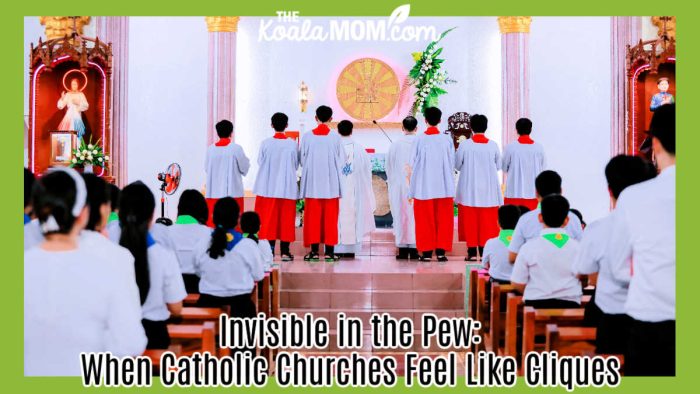
The Church should never be a place where someone has to earn belonging. It should be the place where belonging is offered first and practical help is offered before spiritual direction.
That is the kind of community Jesus built.
And it is the kind of community our parishes are still called to become.
No Responses Yet