


My mom owns a Wheaten Terrier, and like many hypoallergenic dog breeds, he needs frequent baths to keep his coat clean and manageable. That usually means regular trips to the local dog wash; loading him into the car, waiting for an open station, and spending both time and money on a process that has to be repeated again and again. Recently, she started considering a simpler solution: installing a dog washing station in her basement.
As hypoallergenic dogs continue to grow in popularity, more owners are realizing that regular grooming is part of the commitment. An at-home washing station can make that routine far more convenient, especially for larger dogs or breeds that require frequent bathing. But before buying one, safety matters just as much as convenience. A poorly designed station can create slipping hazards, unstable footing, drainage issues, and injury risks for both dogs and handlers. That’s why it’s important to know which safety features are actually worth checking before you install one in your home.
This article covers every safety feature worth checking before you buy, from structural integrity to drainage design. By the end, you’ll know exactly what separates a station that actually protects your dog from one that just photographs well.
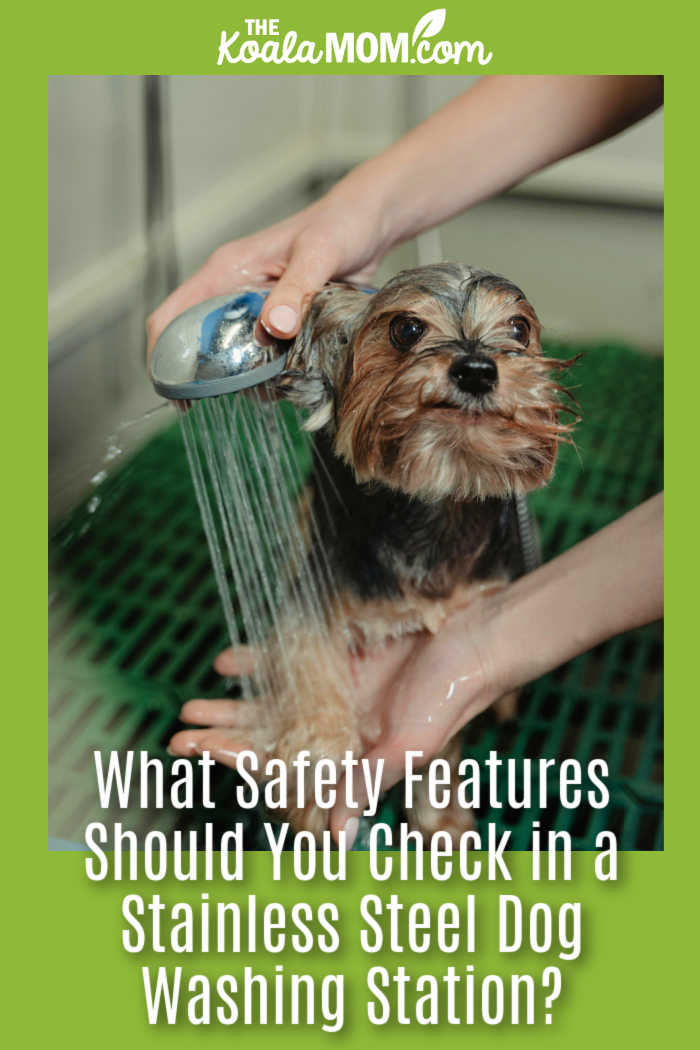
Structural Safety: What the Frame and Finish Tell You
Before installing a dog washing sink, it’s important to guarantee it meets safety standards. A stainless steel dog washing sink should pass a structural inspection before water even enters. Run your hand along every edge and weld seam. Any rough burr or sharp lip? That’s a direct hazard to paws and skin.
Weld Quality and Seam Integrity
Look at where the walls meet the basin floor. A clean, continuous weld with no gaps or pitting means the joint won’t crack under your dog’s full weight. Pitted or uneven welds trap moisture and bacteria, and they fail sooner, sometimes without warning.
Edge Finishing and Corner Radius
All four corners and the top rim should be rolled or radius-ground, not raw cut edges. Squared-off corners catch fur and skin; a proper radius finish adds cost, which is why budget stations skip it.
Load Capacity and Leg Stability
Check the weight rating. A station rated for 50 lbs won’t safely hold a wet, thrashing 70-lb Labrador. Legs need rubber feet or adjustable leveling feet. Without them, the unit rocks on uneven floors, and a rocking station means a falling dog.
Slip and Fall Prevention Inside the Basin
Wet stainless steel is brutally slippery. This single feature gets overlooked most often, yet it’s responsible for the vast majority of bath-time injuries.
Non-Slip Floor Surfaces
The basin floor needs texture, a rubber mat insert, or a factory anti-slip coating. A flat, polished interior looks pristine but gives a wet dog almost zero traction. You can retrofit an aftermarket rubber mat, but a built-in texture is the stronger starting point.
Restraint Points and Safety Loops
A grooming loop or tether ring mounted inside keeps the dog steady and cuts the risk of a sudden leap over the side. The ring should be welded or bolted, not clipped on with a removable hook. Make sure its placement lets the dog stand naturally without the lead pulling at an angle.
Basin Depth and Side Height
Walls should be high enough that a medium or large dog can’t easily jump or tumble out. Anything under 16 inches is risky for dogs above 40 lbs. Walls at 18 to 24 inches give you a genuine safety margin without making it awkward to lift a small dog in.
Drainage and Plumbing Safety Checks
Poor drainage creates standing water; standing water creates slip hazards, bacterial blooms, and electrical risk near outlets or grooming tools. Don’t ignore the drain.
Drain Size and Placement
A center-drain or rear-drain design moves water away from the dog’s feet faster than a corner drain. The opening should be large enough for shedding season, 2 inches or wider, with a removable hair trap. A slow, clogged drain means your dog stands in pooled water the whole bath.
Water Temperature Safety at the Faucet
Some stations include a thermostatic mixing valve or single-lever faucet; others have separate hot and cold taps. Here’s the thing: two separate taps are slower to adjust, and a temperature spike can startle a dog into a hard lunge. Single-lever or preset valves cut that risk down.
Surface Drainage Around the Station
The floor area around the unit matters too. If the station doesn’t come with a floor grate or anti-slip mat for you (the handler), add one. A handler who slips while restraining a dog creates a much worse injury scenario than a dog slipping alone.
Checking safety features in a stainless steel dog washing station doesn’t take long, but it saves both your dog and you from preventable accidents during bath time. Start with structural soundness: clean welds, smooth edges, and a stable frame rated for your dog’s weight. Then move to slip prevention inside the basin; confirm the drain moves water out fast enough to keep the floor clear.
Do all of these checks before you buy, not after. Vevor’s grooming tubs are built with these standards in mind, making them a solid choice for home and professional use.
No Responses Yet