


September brings with it cooler weather, a change of colours, pumpkin spice lattes, and the smell of new books and sharpened pencils. I get excited about the change of any season but there’s something about the new beginnings of September that’s exciting. If you’re jumping into homeschooling for the first time, you probably have a host of questions, doubts and fears.
Over the years, I’ve learned from many experienced homeschool moms, including author and veteran homeschooler Tricia Goyer. As a mom of a large family who homeschooled for decades while also building a writing career, she often shares wisdom that encourages moms who feel overwhelmed by homeschooling.
What I appreciate most is that experienced homeschool moms aren’t encouraging us toward perfection—they’re reminding us that growth happens one day at a time.
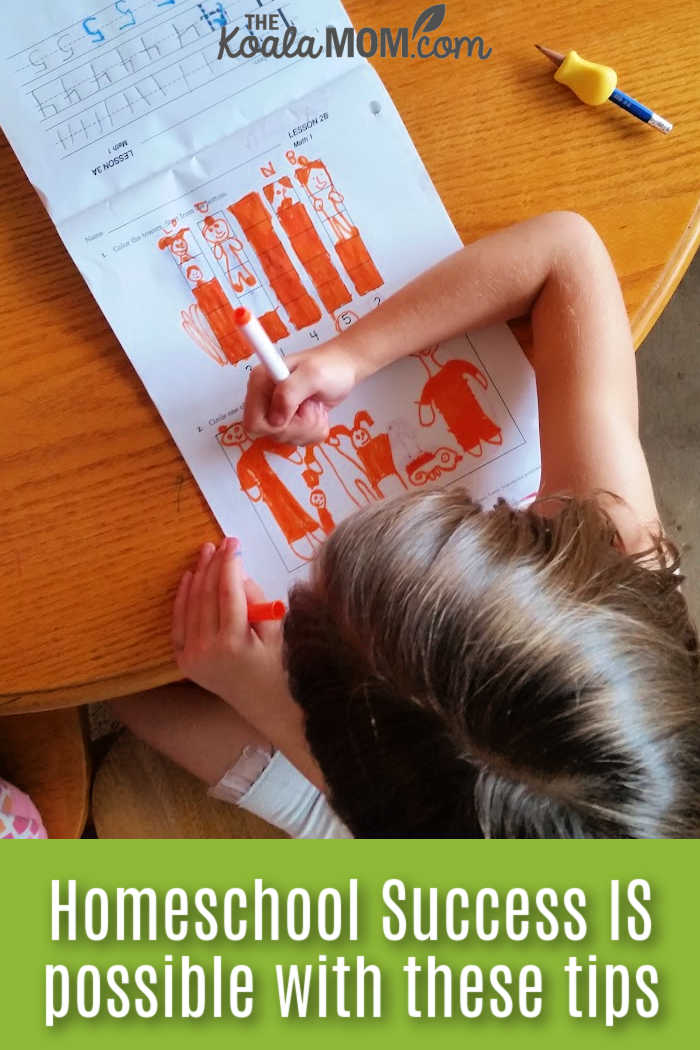
Editor’s note: This post was originally written as a review of a homeschooling resource that is no longer available. It has been updated with timeless encouragement and practical advice for families beginning their homeschooling journey.
Every Homeschool Mom Starts Somewhere
I’ve noticed something about experienced homeschool moms: they can look incredibly confident and capable from the outside. It’s easy to assume they’ve always had it figured out.
For example, I’ve been reading Tricia Goyer’s books for years. She’s written some awesome historical fiction, like The Promise Box and Love Finds You in Glacier Bay. Her book about motherhood, Blue Like Play Dough, was super encouraging to me as a new mom. I was blown away to discover that not only does Tricia write all these books, she also homeschools her kids—and she has TEN kids, including several adopted kids!!!
Before you decide she’s a superwoman with nothing in common with you, stop. Tricia didn’t start homeschooling ten kids. She started with her oldest three kids, about twenty-five years ago (when homeschooling was much less common—I know all about that!).
Once upon a time, Tricia was a mom just like you. A mom who had decided (for various reasons) to homeschool her kids. And if she can figure out how to homeschool her kids (back in the dark ages of homeschooling when you got strange looks for just saying that word), so can you.
Because no one starts homeschooling as an expert.
Every homeschool parent begins with uncertainty. Every family has to figure out routines, curriculum, schedules, and expectations through trial and error. Even moms who have homeschooled for years are still learning, adapting, and changing what works.
Homeschooling is a journey, not a destination.
I was homeschooled from Grade 1 through Grade 12, and now I’m several years into homeschooling my own children. Even with that background, I still don’t have everything figured out. Every year brings new challenges, new needs, and new opportunities to adjust.
That’s one of the biggest lessons I’ve learned: flexibility matters more than perfection.
You Don’t Need a Perfect Plan
One of the biggest misconceptions about homeschooling is that you need to have every detail mapped out before you begin.
You don’t.
You do not need the perfect curriculum. (There isn’t one.)
You do not need a Pinterest-worthy schoolroom. (The dining room or living room will work great.)
You do not need a flawless daily schedule. (That doesn’t even happen in schools, honestly.)
What you need is a willingness to learn alongside your children. That’s the biggest thing I learned from my mom as she homeschooled my brothers and I. She’s a lifelong learner who actually went back to university to do her second degree after we’d all finished high school. Her enthusiasm for whatever we were learning was sometimes annoying, but she modeled constant learning for us.
Some years, your routine will flow beautifully. Other years, everything will need to change for one reason or another. That doesn’t mean you’re failing—it means you’re responding to real life. Homeschooling works best when it fits your family.
Learning Happens in Everyday Life
One of my favorite things about homeschooling is seeing how naturally learning happens outside of textbooks. Education becomes woven into ordinary life.
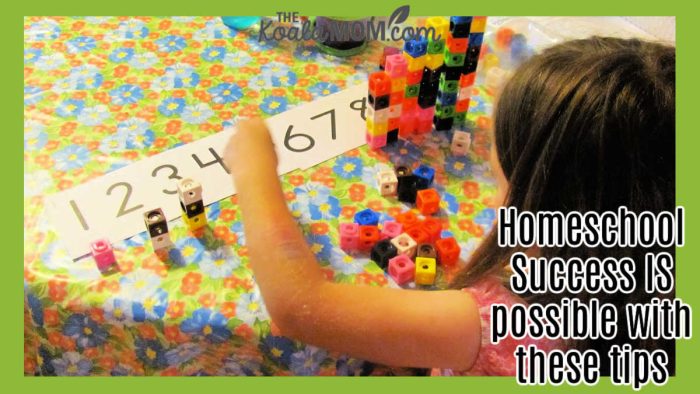
Math happens while baking cookies.
Science happens during nature walks.
Reading happens curled up on the couch.
History happens during meaningful conversations.
When my daughter started Grade 1, I loved being able to connect what she was learning to our daily activities. Instead of school feeling separate from life, learning became part of everything we did. I could tie her textbook science lesson to something we saw at the grocery store, or help her connect the dots between a math lesson on fractions and how to bake cookies.
That’s one of homeschooling’s greatest gifts: it allows education to become relational. You get more teachable moments because you get more time together. As Tricia says, “Education and learning are no longer separated from ordinary life.”
You Are More Qualified Than You Think
I hear one fear over and over from moms considering homeschooling:
“I’m not a teacher.”
Our culture often makes us believe education should be left entirely to professionals. While teachers do incredible work, that doesn’t mean parents are incapable of teaching their children.
You know your child better than anyone else.
You understand their personality, struggles, interests, and pace. You know what motivates them and what shuts them down.
That knowledge matters, and that knowledge can never be replaced by a degree or any other credential. Even if you involve other teachers in your child’s life for certain classes or certain seasons, you will always be their best teacher because you know them best.
If you deeply care about your child’s growth, education, future, and well-being, you already have one of the most important qualifications for homeschooling: love.
Love makes you attentive.
Love makes you persistent.
Love keeps you showing up.
And that matters more than perfection or degrees or curriculum or classroom decor.
Practical Tips for Getting Started
If you’re new to homeschooling, here are a few things I’d encourage you to focus on first:
Start simple
Don’t try to recreate a traditional classroom at home. Begin with the essentials and add more as needed.
Create gentle routines
Kids thrive on rhythm. A predictable flow to your day can reduce stress for everyone. This doesn’t mean you’ll do math at 10 am every morning, but it could mean that you always have breakfast and then story time and then a science lesson.
Choose resources you’ll actually use
The “best” curriculum is the one that works for your family and gets used consistently. Sometimes, it can take a lot of trial and error and research to find this curriculum. When you first start homeschooling, you likely won’t know your teaching preferences or your child’s learning styles. As you figure those out, you’ll be able to tweak what works for you (even if that means changing curriculum mid-year).
Give yourself grace
Some days will feel amazing. Some days will feel messy. Both are normal.
Find community
Connect with other homeschool families, whether online or locally. Encouragement and shared wisdom make a huge difference. My Catholic homeschooling community in the lower mainland has been my support network through a lot of learning and a lot of life events too. We talk online about curriculum and other matters, and try to get together once in a while for field trips and social gatherings.
Homeschooling Is about More than Academics
Homeschooling isn’t just about finishing worksheets or checking boxes (even if you have a school-appointed home learning teacher looking over your shoulder asking you about that).
It’s about discipleship, character formation, relationship, and creating space for meaningful growth. It’s about cultivating a love of learning, a willingness to ask questions, a growth mindset in our kids.
Yes, academics matter. But so do curiosity, resilience, creativity, and connection.
Some of the most valuable learning happens in conversations, challenges, mistakes, and everyday moments.
“More time with your kids means more time for teachable moments.” ~ Tricia Goyer
You Can Do This
If you’re standing at the edge of homeschooling and feeling uncertain, know this: you do not need to have everything figured out before you begin.
Take the next step.
Learn as you go.
Adjust when needed.
Ask for help.
And remember—homeschooling does not have to look like anyone else’s version to be successful.
Your homeschool can be quiet or chaotic, structured or flexible, kitchen-table-based or schedule-driven.
What matters most is building a learning environment where your children can grow and thrive.
You are capable of creating that.
One day, one lesson, one season at a time.
Looking for more tips and inspiration? Check out:
- Kids’ Books that Feature Homeschooling Families
- What is a Hybrid / Blended / Co-op Homeschool Program?
- The Canadian Online Homeschool Conference
- How to Homeschool in BC
You may also like my curriculum idea lists:
No Responses Yet