
)
)
Tears burned my eyes as I accelerated through the intersection, blinking hard so I could see the lane in front of me. My thoughts bounced between the incident that had just happened and what I needed to do about it. I’ve had a lot of hard days as a mom, but that day was definitely one of the worst.
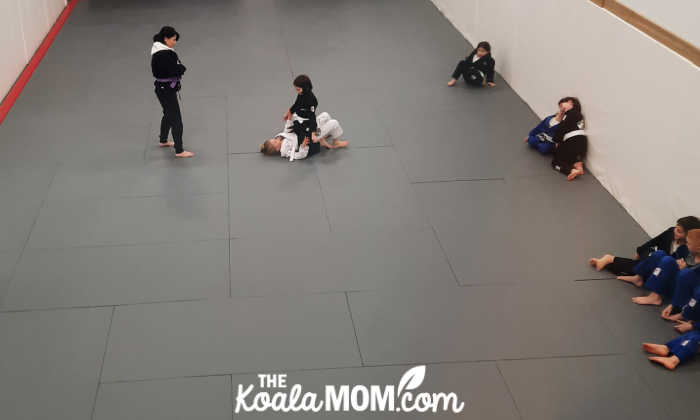
The jui jitsu class started just as every other class had for the last month. My girls participated with the other kids while my 4-year-old son didn’t seem to be aware of the instructor at the front of the room. When another dad went through the exercises beside him, Joey worked hard along with him, enjoying the one-on-one attention. At other times, I redirected him from my seat with the other parents at the edge of the dojo mats, reminding him to listen and do what the other kids were doing.
When the class ended, I let myself relax as the kids began to run around for a few minutes of free time. I was waiting to talk to the instructor when another mom walked up to me with a tear-stained boy at her side.
“Your son just bit my son,” she said.
Heat burned my face as my eyes searched through the blur of running kids to find Joey. I don’t remember what I said to the other mom before I headed across the mats to intercept Joey. I knew he was overexcited by the noise and energy in the room, and likely wanting to play with the other boy, but I felt deeply ashamed. My son had bit another boy. I must be a terrible mom.
This post contains affiliate links; as an Amazon associate, I earn from qualifying purchases.
What’s Wrong with My Son?
Somehow, I got my three children out of the dojo and into our Jeep. Somehow, I drove to my friend’s place for the play date we’d planned earlier that week. I told her the whole story — how I’d thought jui jitsu would be a great way for Joey to run off some energy while also learning discipline. How he was struggling in the classes, unable to pay attention unless the other dad was helping him. How he’d now bitten another kid in his class. He wasn’t the youngest or smallest kid in the class, but somehow he couldn’t participate the way all the other homeschooling kids could.
My friend listened sympathetically and talked about her own struggles with her oldest son and his learning needs. When I got home that day, I sent a long email to my home learning teacher about what had happened. I also received a gentle email from the jui jitsu instructor, telling me Joey could no longer participate in classes. He clearly had athletic ability and talent when he applied himself, but the dojo was unable to offer him the one-on-one instruction he needed.
I tried to tell myself my son was just too young, this class hadn’t been the right fit for him, but my mom sense told me this incident was really a cry for help. He needed something. Part of me hoped my home learning teacher would say this was normal behaviour for a little boy and he’d outgrow it. I’d told myself, many times, when I had a baby boy after having four girls, that boys were different than girls. He’d be more active and more physical than my girls. And yet part of me also knew this was more than just gender differences. This was more than just “boy energy.”
Looking for Help
My home learning teacher’s reply validated the things I didn’t want to look at. She immediately set up a meeting for me with the school’s learning assistance coordinator. We discussed Joey’s behavior, not just at his jui jitsu class, but also at his Pedalheads class the previous summer, which had been a similar disaster.
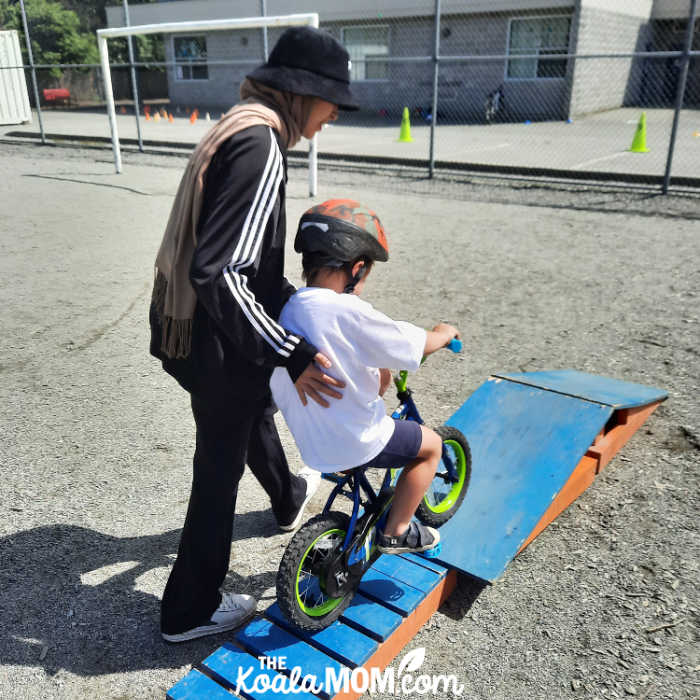
Again, I’d thought an outdoor, active class would be great for Joey. Instead, in a class of four 4-year-old boys, he struggled to focus, participate, or wait his turn. Instead of having a week to spend with his sisters, I spent my week following him around the parking lot, reminding him to do what the Pedalheads instructor had just told him to do.
My son’s school wait-listed Joey for a psycho-educational assessment for possible ADHD and autism. I’d already dug deep into researching what Joey needed and strongly suspected he had ADHD. I went to our family doctor and spent the 10-minute appointment talking as fast as I could. The doctor referred Joey to a pediatrician for an ADHD assessment.
We had to wait several months for a pediatrician, and then we saw her for several visits, spread over the next year. During that time, Joey moved from full-time homeschooling for his Kindergarten year to attending a one-day blended homeschool program. Switching schools meant we lost his spot on the wait-list for a psycho-educational assessment. However, his dad was adamant Joey’s behavioural struggles came from his lack of group social experiences due to covid. As none of our youngest three children had attended daycare or preschool, I disagreed, but the one-day blended program was a chance to have a teacher see what I saw.
I continued to research ADHD and what I learned fit my son’s behaviour and struggles. As I began to talk about what I was learning, I discovered many of my friends had children with either ADHD or autism. One of my best friends has ADHD himself and shared his experience of school struggles, diagnosis, medicating and not medicating, anxiety and depression, and getting re-diagnosed as an adult. He supported my push for a diagnosis, saying early intervention was best.
My mom also listened to my concerns and, on one visit to us, binged through Penn Holderness’ book ADHD Is Awesome, which I’d just ordered. She then began to advocate for Joey, seeing how his struggles showed his unique brain.
This Is ADHD
Joey’s official diagnosis was rather anti-climactic. By the time the pediatrician said he has ADHD, I already knew that, as did everyone who knew Joey well. His pediatrician recommended medication to help address Joey’s struggles at school, but his dad refused. We agreed to try occupational therapy for Joey and found an OT at the same clinic where he was already doing speech therapy. Joey loved his OT, and both his teacher and I saw huge improvements in his ability to deal with transitions and big emotions.
Joey’s diagnosis has made it easier to explain his struggles, not just to him and his sisters, but to others outside our family. The summer after Joey bit his jiu jitsu classmate, we attended a homeschool family camp. On the first day of camp, Joey happily joined a game of toilet tag with a group of kids his age. I remained on the edge of the field, chatting with another mom while also being impressed that Joey was participating so well. Then suddenly, a small group of kids was gathered under the flag pole and Joey had slugged another girl in the stomach. Once again, I was dealing with a hurt child and an angry mom because of my son.
This time, I was better able to figure out what happened. The other mom and I learned that some of the children had gotten tired of playing toilet tag and moved on to another game. Joey, excited and hyperfocused on toilet tag, didn’t want to move on. Unable to deal with his big emotions, he’d reacted physically. I spent the rest of camp trailing him around, helping him participate in the games and helping him regulate his emotions when games didn’t go as he expected. After he fell asleep in our tent, I went into the dining hall to talk with the other moms, staying up way too late to catch up on all the things we couldn’t say during the day while chasing our kids.
Two years later, after Joey’s ADHD diagnosis, we were back at the same camp. This time, Joey was better able to participate in the games, even without my constant supervision. I felt that his OT and even the extra support I was able to give him because of my increased understanding of his needs had made a big difference for him. When he clashed repeatedly with another child, the mom came to me, not in blame but seeking understanding, and we were able to have an honest conversation about our sons and their needs.
ADHD is Awesome
It has now been three years since the incident in the jui jitsu dojo sparked more questions about Joey’s needs. In that time, I’ve learned a lot about neurodiversity and ADHD and everything that goes with it. I’ve learned more about myself and Joey’s sisters too. Now we have open conversations about sensory needs, stimming, RSD, hyperfocus, and other facets of ADHD. My kids are learning to recognize their own needs and advocate for themselves, but also to respect the unique needs of others around them (including siblings and friends).
Like Penn Holderness, we choose to see that ADHD is awesome. While I spend a lot of my time working to help Joey overcome his struggles, I am also amazed by his hyperfocus, his energy, his creativity, his unique way of seeing the world. This is his superpower (even if he needs a bit of help right now managing his frustrations and finding motivation to do hard and boring things).
If anything in my story sounds familiar — if you’ve also asked yourself why on earth your child would act this way or struggle with this particular thing — then I urge you to ask more questions. Here are some resources that have greatly helped me as I’ve explored neurodiversity in general and ADHD in particular:
- ADHD is Awesome: A Guide To (Mostly) Thriving With ADHD by Penn and Kim Holderness
- The Explosive Child: A New Approach for Understanding and Parenting Easily Frustrated, Chronically Inflexible Children by Ross Greene
- Beyond Behaviors: Using Brain Science and Compassion to Understand and Solve Children’s Behavioral Challenges by Mona Delahooke
No Responses Yet