


Some of the most exciting action movies are the ones that put women at the center. From blockbuster hits like Aliens and The Hunger Games to the genre’s earliest stars, female-led action films have been quietly redefining what action looks like for over a century. Part of what makes these films so compelling is the element of surprise: again and again, women are underestimated—by other characters and by audiences—and then prove they can not only do the job, but often do it better. From the cliff-hanging heroines of The Hazards of Helen to today’s space marines and revolutionaries, female action heroes thrive on defying expectations.
This post contains affiliate links; as an Amazon associate, I earn from qualifying purchases.
A Brief History of Women in Action Movies
Hazards of Helen was produced in 1914-1917 and featured the first action hero ever: a woman. At 23.8 hours, Hazards of Helen is the longest film serial ever made. Actress Helen Holmes actually did her stunts herself and said, “If we do not go ahead and do them, what would the pictures be like?” (National Film Preservation Foundation). She even directed (uncredited) some of the episodes. Hazards of Helen featured all the suspense and derring-do of similar films by male stars of that era, such as Buster Keaton and Harold Lloyd, but somehow the suspense is increased by having a woman in danger—or pursing danger. Despite her size, sex, or what people thought of her, Helen got the job done.
Unfortunately, after Helen, men and money entered the movie-making industry and women were more often relegated to roles as villains or victims. In the 1970s and 80s, a woman once again saves the day (and the planet) when Sigourney Weaver as flight officer Ellen Ripley must battle not just one Alien (1979) but a few hundred Aliens (1986). Aliens earned a rare rating of 98% from Rotten Tomatoes plus seven Oscar nominations and was #1 in theatres on its opening weekend, proving that a film about three women (Ellen, the alien queen, and the girl Ellen rescues) appealed to a wide audience.
Like Aliens, the 2010 action hit Salt was originally written for a male lead and then rewritten for a female lead. Salt has some echoes of Hazards of Helen: a woman working in a man’s world has to take action to clear her name of a false accusation. Salt hit #2 on its opening weekend and grossed almost $300 million worldwide. Lead star Angelina Jolie has appeared in other action movies, including Lara Croft: Tomb Raider and Eternals, showing that an actress can be beautiful, strong, and talented.
 A 2024 documentary explored Sigourney’s influence in film. The teaser blurb asks, “What happens when a young, unknown actress becomes the first female action hero and an international movie star? With her appearance in Alien in 1979, Sigourney Weaver made cinema history: for the first time a woman had played the lead role in an action movie. 45 years later, with blockbusters such as Ghostbusters and Avatar under her belt, she remains an adored icon, with an incomparable career that has cemented the path of emancipation for female roles.” The site notes that the Venice Film Festival honored Sigourney Weaver with the Golden Lion for Lifetime Achievement.
Action Movies with Strong Female Characters
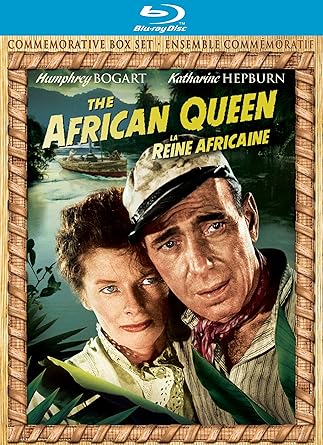 While the list of action films with a female lead character is short, there’s a long list of action films with strong female characters. There’s a saying that “behind every good man is a good woman” and we see that over and over again in action movies. In The African Queen (1951), Katharine Hepburn plays the role of a woman who—bent on revenge—motivates a drifting, careless, frightened Humphrey Bogart to action. Yet she doesn’t do this just by batting her eyelashes at him and asking him to help her; she jumps right into the action and motivates him by her own example. Katharine is willing to try new things, to learn, to work hard, and to face her fears. She is really the “action” in that movie. The 2021 adventure/fantasy movie The Jungle Cruise had a similar vibe between lead characters Dwayne Johnson and Emily Blunt.
Avatar (2009) made $760 million domestically and is highest grossing film worldwide, according to Box Office Mojo. It featured a strong female character (Neytiri) who has to teach the male character (Jake) how to survive in her world. The world of the Na’vi, held up as a better world than our own, seems to be much more gender-equal than ours. It is led by a man and a woman together and women are shown fighting beside men through many of the movie’s battle scenes. Neytiri is fearless, bold, and physically competent, whether she’s riding a horse or a flying dragon, fighting off dogs or battling gigantic armoured men. Dr. Grace Augustine (played by Sigourney Weaver) is a secondary character, yet she is willing to stand up for what she believes in (in what is otherwise a money-hungry man’s world).
 Mr. and Mrs. Smith (2005) is about two assassins. One of the reasons it was #1 in theatres on its opening weekend (beside the on-screen chemistry between two hot actors) is likely the surprise of Mrs. Smith. We’ve seen male assassins before, but not only is Mrs. Smith an assassin, she’s also a better assassin than her husband. Mr. and Mrs. Smith plays on our expectations of gender, putting a woman in the middle of lots of shooting and explosion. And while this film exploited Mrs. Smith’s sexiness, it showed us that a woman is capable of doing everything a man is—and even of doing it better.
Iron Man 3 was fifth on Box Office Mojo’s list of highest grossing movies worldwide in 2013 and gives Iron Man’s assistant Pepper her biggest role yet. I find it amusing that this movie topped out the first two; perhaps it’s due to the tent-pole franchise (fans of the first two movies of course waited in anticipation for the third), but Iron Man 3 was my favourite of the trilogy because of Pepper’s role and Iron Man’s changing attitude towards women.
I really disliked Iron Man in the first two movies because of his womanizing and selfish attitude—and the way he puts Pepper down. I loved the fact she saves his life in the third movie. We see Pepper as this super capable office assistant, yet when she has to, she is also able to physically kick butt (to save the man she loves, of course). Iron Man’s attitude toward women has changed, too, now that he’s in a committed relationship with Pepper. His humour is still there but Pepper has had a softening influence on him—a great character arc in a male superhero who has a good woman behind him.
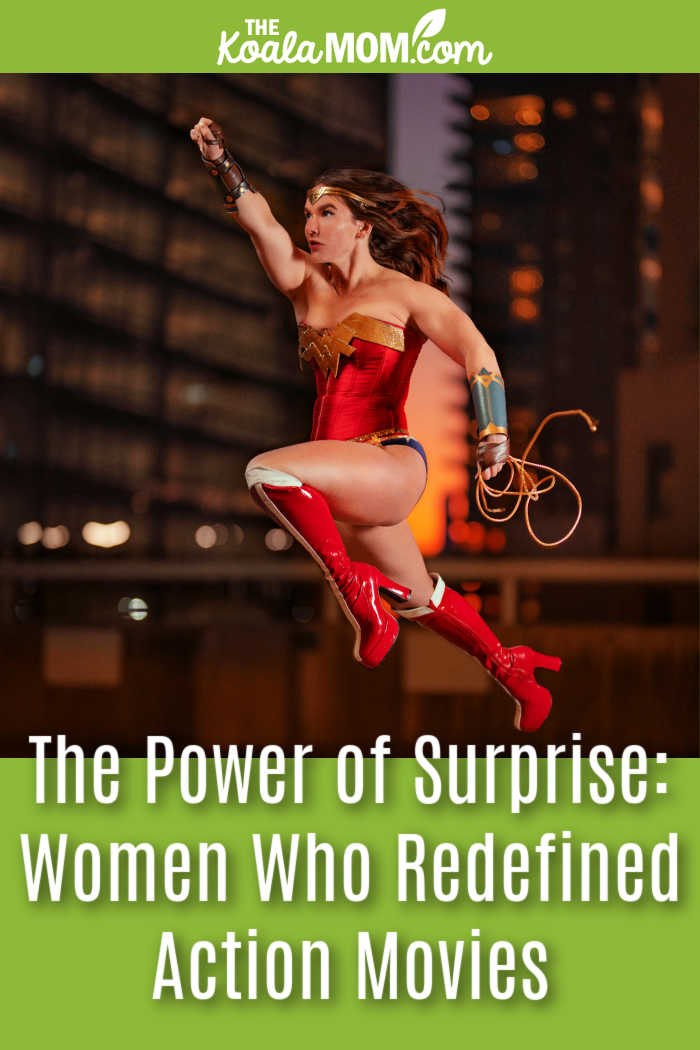
Newer action movie hits like Wonder Woman (2017), Captain Marvel (2019) and Black Widow (2021) continue to show what women can bring to action movies. Gal Gadot, Brie Larson, and Scarlett Johanssen all follow in Sigourney Weaver’s footsteps as bold, strong, problem-solving women who save the world by being themselves.
Because She’s a Woman
While I think movies like Hazards of Helen and Aliens have shown that women can do whatever a man can do, I also like to see movies in which a woman saves the day because she is a woman. When The Lord of the Rings movies came out, there was some commentary about the fact that the screenwriters chose to change the story a bit to include more female characters. Arwen and Aragorn’s love story becomes central, rather than an afterword, and Arwen saves Frodo’s life. Galadriel’s role is also expanded. Like Iron Man 3, it is the third Lord of the Rings movie—The Return of the King—which made the most money (seventh for worldwide box office grosses). Fan-based anticipation? Maybe. Strong female character? Probably.
When we first meet Eowyn in the films, we see her as a bored, lonely young woman caring for her sick father and longing for something greater in life. To ride into battle, she has to disguise herself as a man. We see her fear in the battle scene, yet she doesn’t back down. Like many other female characters, Eowyn is fighting for someone she loves: her father. Yet she’s also given the best line in the movie:
The witch king: “You fool. No man can kill me! Die now.”
Eowyn: “I am no man. Aaaaaah!” (and she kills him)
Because of her courage AND her femininity, Eowyn is able to do something no man can do—she strikes a victory for the entire army and for all of Middle Earth, in fact. And while The Lord of the Rings might have been short on female characters, it was full of characters who, like Eowyn, were overlooked for various reasons: Frodo and the other hobbits for their size, Faramir because he is the second-born, etc. One key reason these stories appeal to a wide audience is that all of us, at various times in our life, have felt overlooked. We’ve felt we can’t do something. So we love to see characters succeed on the big screen despite the obstacles thrown their way because of who they are.
Strong Female Leads in Animated Films
The Incredibles is an animated superhero movie in which we see a strong, female lead character. Elastagirl saves Mr. Incredible’s life early in the movie and is clearly capable as a superhero, but she gives it up to become a mom. Yet when her family is in danger, she’s ready to fight. She has to save Mr. Incredible’s life once again, both by her creativity and flexibility—and by throwing a few punches. I love the fact that her superpowers are linked to her strengths as a mom. She can stretch. Really far. Once again, we see a good woman behind a good man.
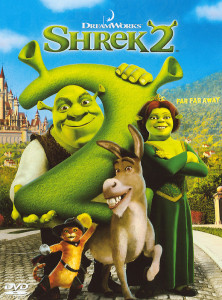 The last three Shrek movies made it into the top 50 spots on Box Office Mojo’s list of highest grossing hits. Shrek 2 comes in at 26, Shrek the Third at 40, and Shrek Forever After at 49. While these movies focus on Shrek, he wouldn’t be Shrek without Fiona—and Fiona is a kickass princess. From her kung-fu moves in the first movie to her battle strategies in the last movie, Fiona is an action star.
While I personally feel Shrek the Third is the weakest of the four movies, it features Fiona and a host of princesses storming castles, bashing in walls, and rescuing themselves. In Shrek Forever After, Fiona decides she’s not going to wait for a prince to rescue her; she’s going to embrace her identity as an ogre and go out after the bad guy. That character is totally in keeping with the bold, brave princess we know from the first three movies. While Shrek has to deal with various psychological struggles in each of the movies, Fiona is a nearly-perfect princess, both beautiful and feisty.
All of these movies are stronger, I believe, because of the female star. She adds extra depth, extra humour, extra character development to each of the movies. And I think these movies also more accurately reflect our general population (hey, half of us are women!) than most male-centered action films. I’ve often walked out of a movie (The Eagle and most James Bond and Die Hard movies jump to mind) complaining that there weren’t any women—or that the women were obviously just “token” females who only show up to be a love interest. I don’t need a mushy love story in every movie I watch, but there’s something about a strong female role in a movie that makes it more interesting—and less about just blowing up cars or shooting someone.
Do Women Belong in Action Movies?
I’ve heard it said that women aren’t suited to action because they are more likely to talk things out than to respond physically. To that, I’d ask—bear fight, anyone? Brave is a movie about a mother-daughter relationship—with plenty of action. Like Eowyn, Merida is a princess who has been given a specific role and longs for more. In the opening scene of the movie, we see her shooting bulls-eyes while riding a galloping horse and then climbing a steep cliff—a physically capable heroine who challenges current ideas about young women. Yet when she attempts to change her situation, Merida needs more than just her skills with a bow and arrow to save herself—and her mother.
One of my favourite scenes is when Merida makes a speech to the entire crowd gathered in the castle great hall in order to sneak her mother upstairs to get the tapestry they need to break the spell. Merida has to apply the lessons in elocution which she needed as a princess—and hated. This is the rallying speech we’ve seen often in many other action movies, including Aragorn’s speech before the walls of Mordor in The Return of the King.
Bolt is a movie about a small male dog who belongs to a female TV action star. Bolt befriends a stray female cat named Mittens, who rescues him several times and helps him realize he’s not a superdog (and that’s okay). Towards the end of the movie, Mittens reveals that she’s been declawed. She feels shame over this, even though she’s proved she’s a tough cat who can survive on the streets without her claws. Like her, female action stars in modern movies have been “declawed,” left to play only roles as the token female or the love interest. Yet just as Mittens comes up with creative ways to not only survive but also save the day, I think female action stars also have the potential to surprise audiences and successfully take the lead role in any movie. The history of action films—and their females stars—proves this.
This article is adapted from my final paper for my Action Movie class at UVic in 2013.
No Responses Yet